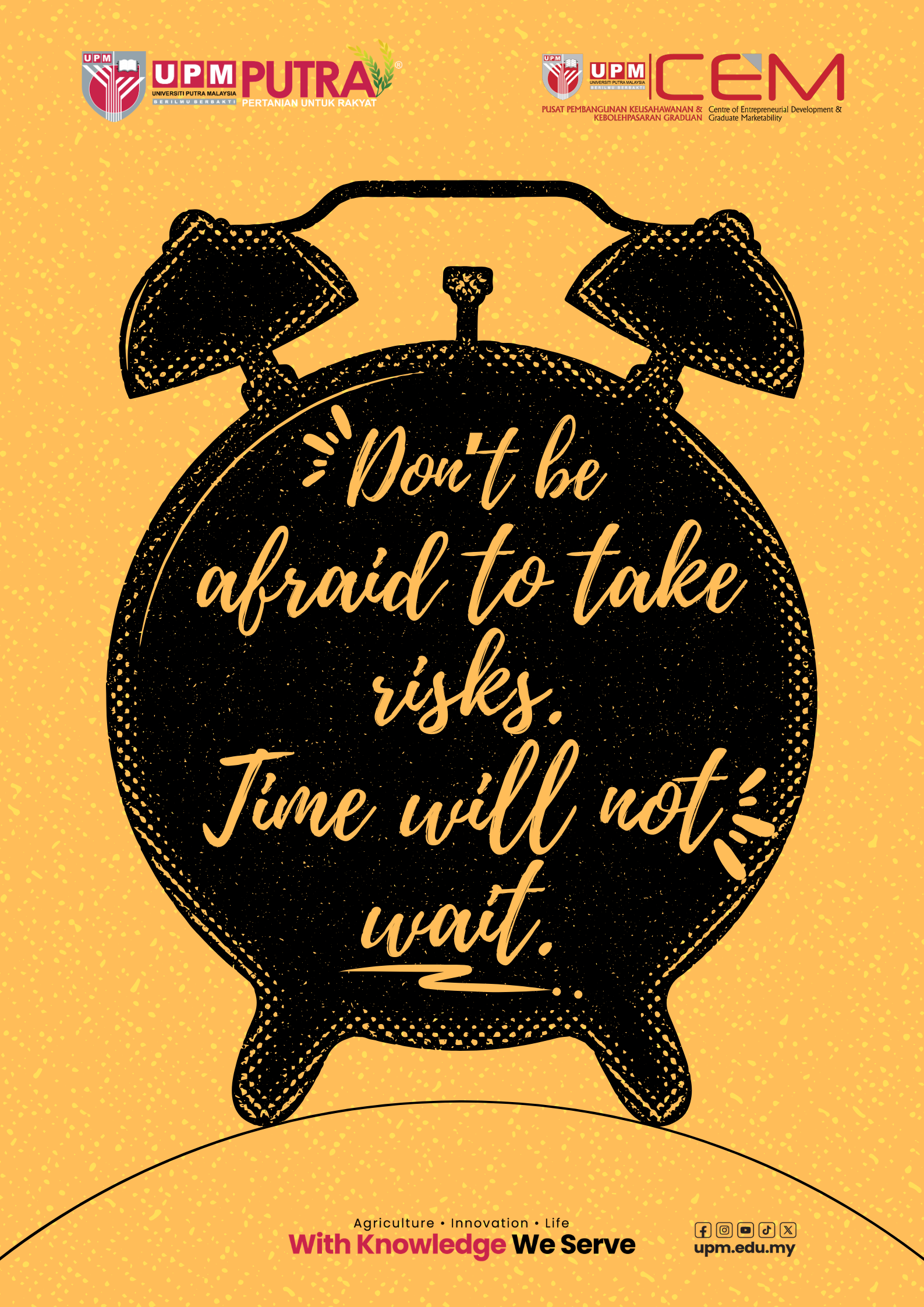
Don’t Be Afraid to Take Risks: Why Waiting Holds You Back
A lot of students like the idea of starting something, an online business, a small service, a side hustle, but never quite get around to it. Not because they lack ideas, but because they’re waiting. Waiting for more time, more money, more confidence, or that one moment where everything finally feels “right.”
The problem? That moment doesn’t exist.
Here’s why waiting holds you back, and what to do instead:
1. “Perfect Timing” Is Just Procrastination in Disguise
It’s easy to tell yourself you’re being smart by waiting. After all, planning matters, right? But there’s a difference between preparing and postponing.
Overthinking often shows up as endless “what ifs”:
â— What if I fail?
â— What if no one buys?
â— What if I’m not ready?
These thoughts feel productive, but they don’t move you forward. At some point, thinking becomes a comfort zone. You stay busy in your head so you don’t have to take action in real life.
The reality is, no amount of planning can eliminate uncertainty. You can only learn by doing.
2. Waiting Doesn’t Reduce Risk—It Delays Growth
Many people wait because they think starting later means starting safer. But in entrepreneurship, experience is what actually reduces risk.
If you start now and make mistakes, you gain:
â— Real feedback from real people
â— A clearer understanding of what works (and what doesn’t)
â— Skills you can’t learn from theory alone
If you wait, you’re not avoiding failure—you’re just postponing learning. And while you’re waiting, someone else might already be testing the same idea, improving, and moving ahead.
3. Students Are in the Best Position to Take Small Risks
Ironically, students often feel the least ready to start—when they’re actually in one of the safest phases to try.
You typically have:
â— Fewer financial responsibilities
â— More flexibility with time
â— Access to networks (friends, lecturers, campus communities)
This makes it easier to experiment on a small scale. You don’t need to launch a full business immediately. You can start with something simple: selling to friends, testing an idea online, or offering a small service. The goal isn’t to be perfect—it’s to begin.
4. Action Creates Clarity (Not the Other Way Around)
A common mistake is thinking clarity comes before action. In reality, it’s the opposite. You won’t feel fully confident before you start. You become confident because you start.
Taking even one small step by either posting your product, offering your service, talking to a potential customer gives you more insight than weeks of thinking. Each action reduces uncertainty and builds momentum.
5. Start Small, But Start Now
You don’t need a big launch, a perfect brand, or a detailed five-year plan. What you need is movement.
Ask yourself:
â— What’s the smallest version of my idea?
â— Who can I test this with today?
â— What can I do in the next 24 hours?
Maybe it’s selling to five people instead of fifty. Maybe it’s posting once instead of building a full campaign.
Small steps may feel insignificant, but they compound quickly. Momentum builds confidence—and confidence fuels bigger action.
Waiting feels safe, but it comes at a cost. Every day you delay is a day you could have been learning, improving, and getting closer to something real. So instead of waiting for the “right time,” start where you are, with what you have. Because in entrepreneurship, progress doesn’t come from perfect timing—it comes from taking the first step.
Written by : Muhammad Hazeem Aizuddin bin Azmi
Industrial Training Student in CEM
Beaucoup d’étudiants ont envie de lancer quelque chose : un petit business en ligne, un service, ou un projet à côté des études. Mais au final, ils ne passent jamais à l’action. Non pas parce qu’ils manquent d’idées, mais parce qu’ils attendent. Ils attendent d’avoir plus de temps, plus d’argent, plus de confiance… ou simplement le “bon moment”, celui où tout semble enfin parfait.
Le problème ? Ce moment n’arrive jamais vraiment.
Alors, pourquoi attendre te bloque… et que faire à la place ?
Le “bon moment” est souvent une excuse
Attendre peut donner l’impression d’être raisonnable. On se dit qu’on prépare bien les choses. Mais il y a une différence entre se préparer et repouss
Ces pensées semblent utiles, mais elles n’apportent pas de progrès. À force de réfléchir, on reste dans sa zone de confort… sans jamais agir.
La vérité, c’est qu’on ne peut pas tout prévoir. On apprend surtout en faisant.
2. Attendre ne réduit pas le risque
Beaucoup pensent que commencer plus tard est plus sûr. En réalité, en entrepreneuriat, c’est l’expérience qui réduit le risque. Si tu commences maintenant, même avec des erreurs, tu gagnes :
â— des retours concrets de vraies personnes
â— une meilleure compréhension de ce qui marche (ou pas)
â— des compétences qu’on ne trouve pas dans les cours
Si tu attends, tu ne fuis pas l’échec—tu retardes simplement ton apprentissage. Et pendant ce temps, d’autres avancent déjà.
3. Les étudiants ont un avantage
On pense souvent que les étudiants ne sont pas prêts. Pourtant, c’est souvent l’un des meilleurs moments pour essayer.
Tu as généralement :
â— moins de responsabilités financières
â— plus de flexibilité dans ton emploi du temps
â— un réseau autour de toi (amis, profs, campus)
C’est un environnement idéal pour tester des idées sans trop de pression. Pas besoin de créer une grande entreprise tout de suite.
Tu peux commencer simplement : proposer un service, vendre à petite échelle, ou tester une idée en ligne.
4. L’action apporte la clarté
On croit souvent qu’il faut être sûr avant de commencer. En réalité, c’est l’inverse. Tu ne deviens pas confiant avant d’agir—tu le deviens en agissant.
Un petit pas suffit : publier ton idée, parler à un client potentiel, proposer quelque chose. Chaque action te donne des réponses concrètes. Petit à petit, le doute diminue et la motivation augmente.
5. Commence petit, mais commence maintenant
Tu n’as pas besoin d’un projet parfait, ni d’un grand lancement.
Pose-toi simplement ces questions :
â— Quelle est la version la plus simple de mon idée ?
â— À qui puis-je la proposer aujourd’hui ?
â— Quelle première action puis-je faire dans les prochaines 24 heures ?
Peut-être vendre à quelques personnes seulement. Peut-être publier une seule fois.
Ce sont de petits pas, mais ils créent du mouvement. Et le mouvement crée la confiance.
Attendre semble rassurant, mais cela a un prix. Chaque jour que tu repousses est un jour de moins pour apprendre et progresser. Alors au lieu d’attendre le moment parfait, commence avec ce que tu as, là où tu es. Parce qu’en entrepreneuriat, on n’avance pas grâce au bon timing—mais grâce au premier pas.
Ecrit par : Muhammad Hazeem Aizuddin bin Azmi
Stagiaire au CEM UPM
Date of Input: 09/05/2026 | Updated: 09/05/2026 | hendrik
MEDIA SHARING